

Fiber-optic cabling offers excellent speed and reliability, but installing fiber between two locations is not always practical. Trenching, road-crossing permissions, civil work, long installation times, and recurring leased-line charges can make a short network connection surprisingly expensive.
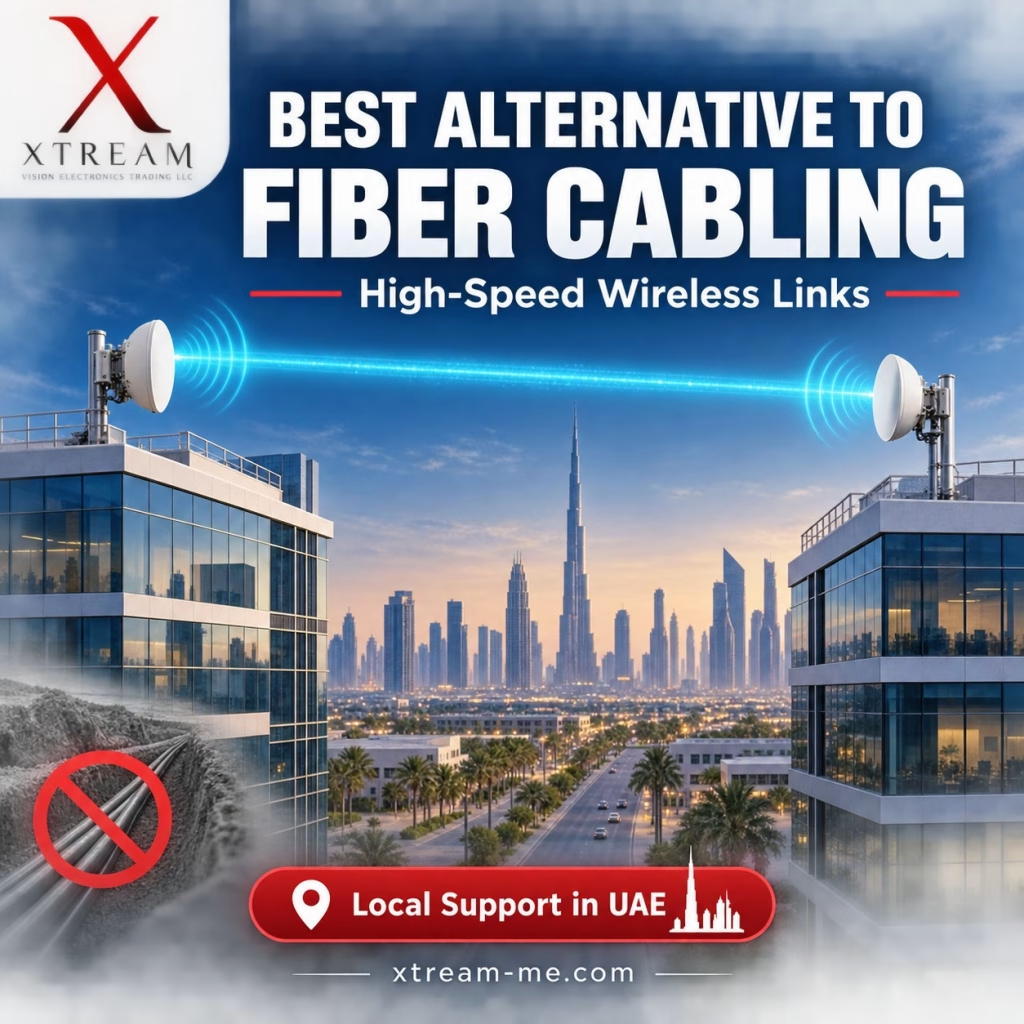
A properly designed point-to-point wireless link can provide a fast and cost-effective alternative to fiber cabling. It can connect offices, warehouses, factories, CCTV sites, construction areas, campuses, and remote facilities without digging up roads or waiting months for cable installation.
Xtream Vision Electronics Trading LLC provides wireless point-to-point solutions with local technical support in the UAE. Depending on the required speed, distance, and site conditions, we can recommend either a LigoWave wireless solution or a professional microwave link.
What Is a Wireless Point-to-Point Link?
A point-to-point wireless link, also known as a PTP link or wireless bridge, connects two fixed locations using outdoor directional radios.
One radio is installed at each location. The radios face each other and create a secure wireless connection that carries network traffic between the two sites.
The connection can transport:
- Internet connectivity
- Business network traffic
- CCTV video
- VoIP communication
- Access-control data
- Industrial monitoring traffic
- Files, applications, and database access
From the network’s perspective, the wireless link works much like a cable connecting the two locations.
When Is Wireless Better Than Fiber Cabling?
A wireless link can be a suitable option when fiber installation is too expensive, too slow, or physically difficult.
Common situations include:
- Two buildings separated by a road
- An office connected to a nearby warehouse
- CCTV cameras installed in remote areas
- Temporary construction sites
- Oil and gas facilities
- Factories and industrial compounds
- Schools, universities, and hotel campuses
- Ports, logistics yards, and parking areas
- Remote telecom and ISP sites
Wireless deployment usually requires outdoor radios, mounting structures, network cabling, power, alignment, and configuration. It can often be completed without trenching or major civil work.
Choose the Solution Based on Your Required Speed
The best equipment depends on the actual usable throughput required by your applications.
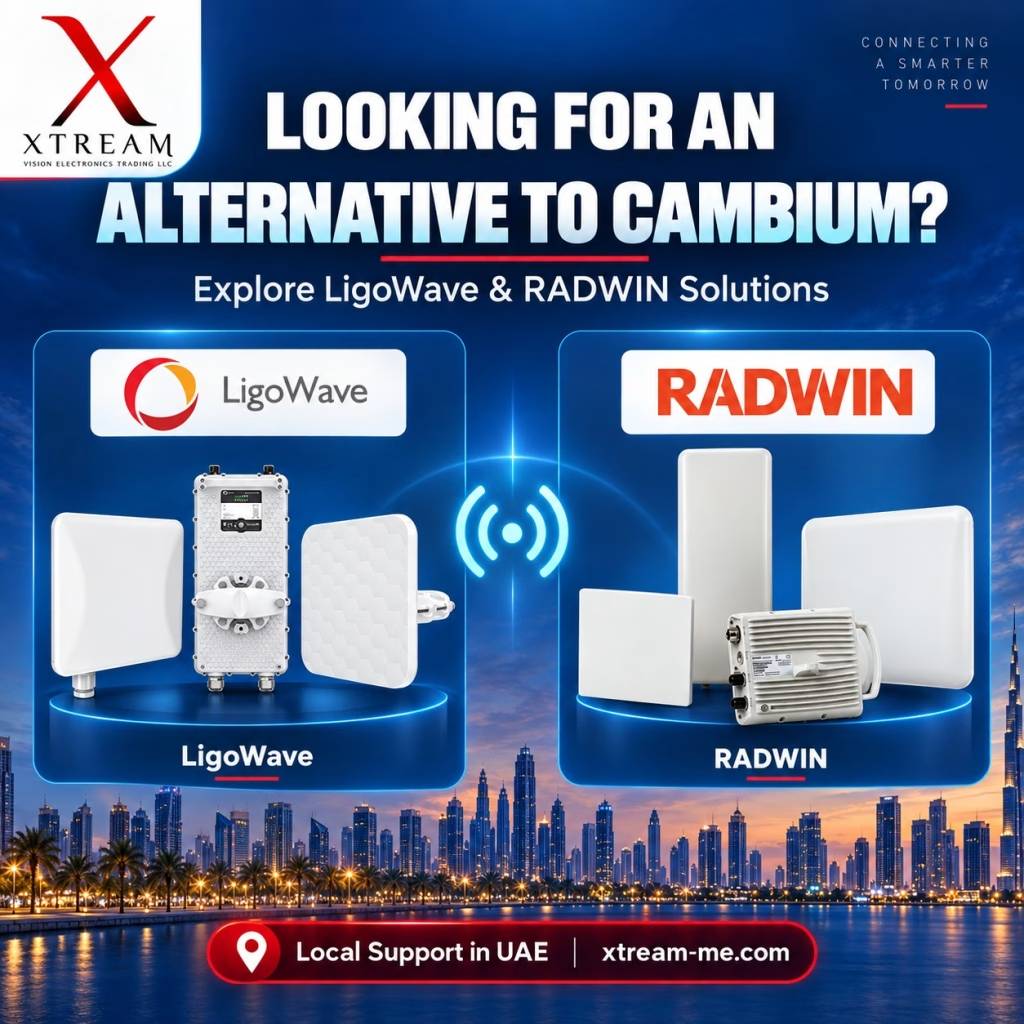
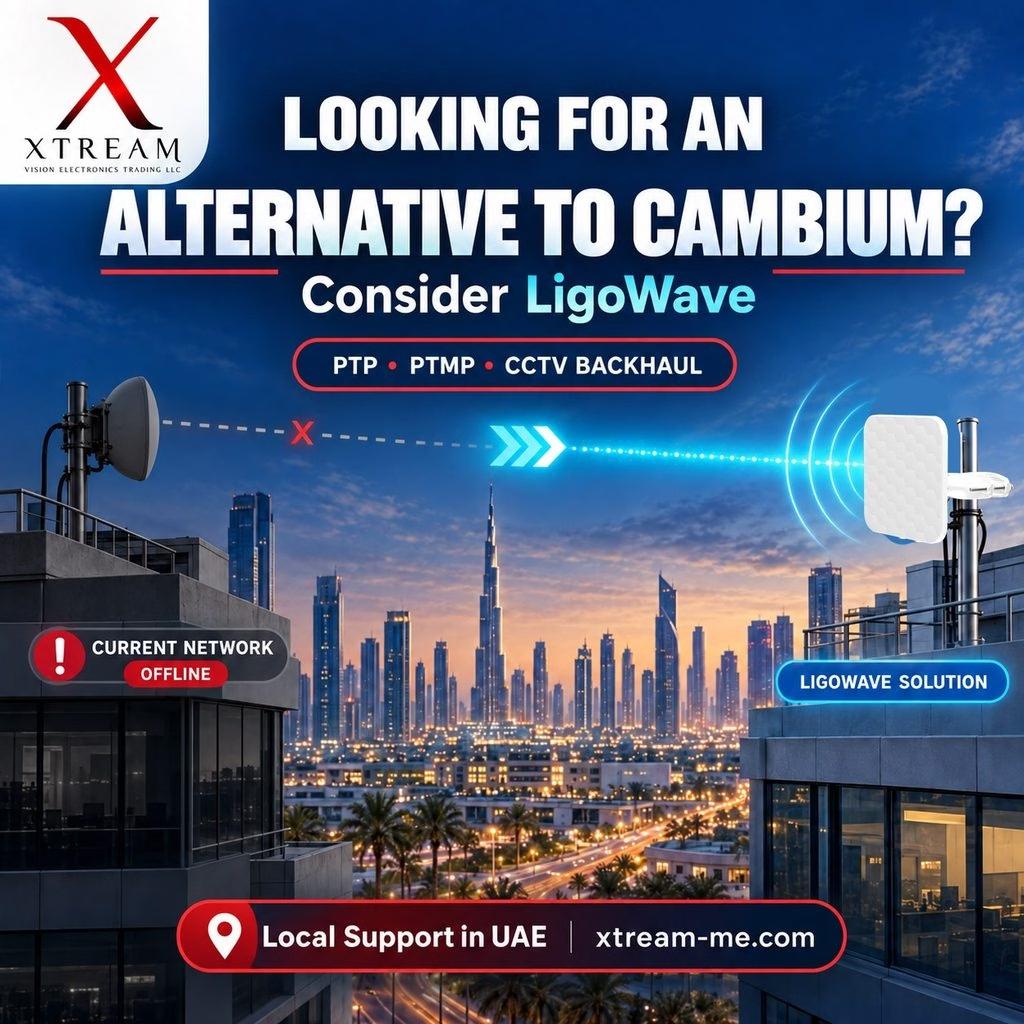
For Speed Requirements Below 1500 Mbps: Choose LigoWave
If your required link speed is less than 1500 Mbps, a LigoWave point-to-point solution can be a practical and economical choice.
LigoWave wireless devices are suitable for applications such as:
- Office-to-warehouse connections
- Business internet sharing
- CCTV backhaul
- School and hotel campuses
- Light industrial networks
- ISP and WISP infrastructure
- Temporary and remote-site connectivity
LigoWave solutions are available for different distances, frequencies, antenna requirements, and operating conditions. They can provide a strong balance between performance, deployment time, and project cost.
The final usable speed will depend on the selected model, channel width, frequency availability, signal strength, interference, distance, and line-of-sight conditions.
For Speed Requirements Above 2 Gbps: Choose a Microwave Link
If your network requires more than 2 Gbps, Xtream can provide a professional microwave-link solution.
Microwave links are designed for high-capacity and mission-critical connections. They are suitable for telecom operators, ISPs, government networks, industrial facilities, airports, utilities, and large enterprise projects.
Depending on the project, professional microwave systems can offer:
- Gigabit and multi-gigabit capacity
- Low and consistent latency
- High link availability
- Licensed-frequency operation
- Strong interference protection
- Advanced network management
- Long-distance connectivity
- High-performance backhaul
Xtream supplies professional microwave-link solutions, including licensed-frequency options for demanding backhaul applications.
What About Requirements Between 1500 Mbps and 2 Gbps?
Projects requiring between 1500 Mbps and 2 Gbps should be evaluated individually.
At this capacity, performance depends heavily on the radio model, selected frequency, channel availability, local interference, distance, and required availability. Our technical team can review the project and determine whether a LigoWave solution, a gigabit wireless system, or a licensed microwave link is the most suitable choice.
Wireless Link vs Fiber Cabling
| Feature | Point-to-Point Wireless | Fiber Cabling |
|---|---|---|
| Installation | Radios mounted at both locations | Cable must be installed between sites |
| Civil work | Usually minimal | Trenching and ducting may be required |
| Deployment time | Often faster | Can take weeks or months |
| Road crossings | No physical cable crossing | Permits and civil work may be necessary |
| Capacity | Depends on selected wireless technology | Very high and easily scalable |
| Interference | Must be considered during planning | Not affected by radio interference |
| Physical cable damage | No cable between sites | Vulnerable to cuts and construction damage |
| Site requirements | Clear signal path is normally required | A physical cable route is required |
| Relocation | Equipment can be relocated | Installed cable is fixed |
| Project cost | Often lower for difficult routes | Can become expensive when civil work is involved |
Wireless does not replace fiber in every situation. Fiber remains a strong choice where extremely high capacity and a permanent cable route are available. Wireless becomes especially valuable when the fiber route is expensive, delayed, unavailable, or vulnerable to accidental damage.
Why Proper Link Planning Is Important
Installing two radios does not automatically guarantee the expected performance. A professional wireless-link design should consider several factors.
Clear Line of Sight
The antennas should have a clear path between the two locations. Buildings, trees, cranes, terrain, and other objects can weaken or block the signal.
Fresnel-Zone Clearance
A wireless link needs clearance around the direct signal path. Rooftops or obstacles near this area can reduce performance even when both locations appear visible.
Distance and Mounting Height
The distance between sites and the height of each mounting point affect antenna selection and link reliability.
Frequency and Interference
Unlicensed frequency bands can be affected by nearby wireless networks. A spectrum check can help identify suitable operating channels. Licensed microwave frequencies can provide better protection from interference for critical links.
Required Availability
A standard business connection and a mission-critical telecom backhaul link have different design requirements. Projects requiring high availability need sufficient signal margin, suitable antennas, dependable mounting, and environmental planning.
Real Throughput Requirement
Wireless data rates shown in product specifications do not always represent the usable application throughput. The link should be selected according to the actual traffic it must carry.
Is a Wireless Link Suitable for CCTV?
Yes. Point-to-point wireless is widely used to carry video from remote IP cameras to a control room or network video recorder.
The design should consider:
- Number of cameras
- Camera resolution
- Frames per second
- Video codec
- Average and maximum bitrate
- Recording method
- Additional network traffic
- Future camera expansion
Xtream can calculate the estimated CCTV bandwidth and recommend suitable wireless equipment for the project.
Benefits of Choosing Xtream in the UAE
Xtream Vision Electronics Trading LLC has supplied wireless networking and telecommunications solutions since 2015. Our Dubai team supports system integrators, ISPs, enterprises, and project contractors across the UAE, Middle East, and Africa.
Customers can receive assistance with:
- Product selection
- Link-budget planning
- LigoWave point-to-point solutions
- Licensed microwave-link solutions
- Antenna selection
- Network design
- Configuration support
- Remote technical support
- Installation coordination
- Troubleshooting and performance improvement
Working with a local wireless supplier makes it easier to discuss the application, verify equipment availability, and receive support during UAE business hours.
Information Required for a Wireless-Link Proposal
To recommend the right alternative to fiber cabling, send us the following information:
- GPS coordinates or Google Maps pins for both locations
- Distance between the two sites
- Required usable speed in Mbps or Gbps
- Installation height at both locations
- Photographs from each proposed mounting point
- Application, such as internet, CCTV, voice, or business data
- Required link availability
- Preference for licensed or unlicensed frequency
- Installation and configuration requirements
Our team will use this information to determine whether LigoWave or a professional microwave link is more suitable.
Frequently Asked Questions
Can wireless replace fiber between two buildings?
Yes, when the locations have a suitable signal path and the selected wireless equipment supports the required capacity and availability. A site assessment is recommended before final equipment selection.
How much speed can a point-to-point wireless link provide?
The speed depends on the radio technology, frequency, channel width, distance, interference, and signal quality. For requirements below 700 Mbps, Xtream can recommend suitable LigoWave options. For requirements above 1 Gbps, a professional microwave link may be more appropriate.
Is a wireless bridge reliable?
A correctly designed and installed wireless bridge can provide a stable connection. Reliability depends on proper equipment selection, antenna alignment, signal margin, mounting quality, frequency planning, and environmental conditions.
Do I need permission to install a microwave link in the UAE?
Licensed-frequency links may require frequency coordination and approval from the relevant UAE authority. Requirements depend on the equipment and frequency band. The licensing conditions should be confirmed before deployment.
Is wireless cheaper than fiber?
Wireless can be significantly more economical where fiber requires trenching, road crossings, permits, or a long cable route. The total cost still depends on equipment, mounting, cabling, installation, licensing, and support requirements.
Request a Wireless-Link Proposal from Xtream
If fiber installation is too expensive, delayed, or unavailable, a point-to-point wireless link may be the right solution.
For requirements below 1500 Mbps, we can recommend a suitable LigoWave wireless solution. For requirements above 2 Gbps, we can provide a professional microwave link for high-capacity connectivity. Requirements between these capacity levels will be assessed individually.
Send Xtream your site coordinates, distance, and required speed to receive a project-specific recommendation.
Xtream Vision Electronics Trading LLC
Dubai, United Arab Emirates
Phone: +971 4 265 8330
Email: sales@xtream-me.com
Website: www.xtream-me.com